Many people have foot pain when they walk, and it can make everyday life uncomfortable. The pain is often felt while walking and can range from a mild, tight feeling to a sharper, stabbing one. After a lot of time on your feet, or after sitting still for a while, the foot often feels more sore or tired. This article is for anyone who has found they need to change how they walk or what shoes they wear to ease the discomfort. If you want to understand what may lie behind foot pain when walking, it helps to look at the many possible causes and the symptoms that often come with it.
What is foot pain when walking?
Foot pain when walking usually means pain that comes on when you put weight on the foot. It can be mild or strong, and you often notice it during ordinary, everyday movements. It can be a general discomfort that makes it hard to walk without feeling sore or stiff. Many people notice the pain most with their first steps in the morning or after resting for a while, and find it can get worse if they keep going with demanding activities during the day.
Some typical symptoms are:
- Pain when you put weight on the foot
- Tired or stiff muscles in the foot
- Discomfort when pressing on certain parts of the foot
- Slight swelling or a burning feeling
These symptoms feel different from person to person and depend on what your feet are put through. The discomfort many people feel is linked to how the foot takes the strain when walking, and for some this brings on pain straight away. It is often the body’s natural way of signalling that the foot needs a rest or a change in how much it is asked to do. A basic understanding of what foot pain when walking looks like gives you an overview and makes it easier to see whether it may be linked to your everyday habits or activities.
Common causes of foot pain when walking
Foot pain when walking can come from the way the foot takes the strain. Typical examples are a sharp pain in the heel with the first steps after resting, a burning feeling under the ball of the foot on longer walks, or a general soreness and tiredness in the arch and foot muscles after repeated strain. Overuse from many repeated movements, or a sudden increase in activity, can cause local irritation and extra tension in muscles and connective tissue.
How the pain shows up in everyday life
The pain often appears at certain times: when you get up after sitting, on longer walks or after a long time standing at work. It can feel stabbing and sharp or more like a dull, pressing soreness, and some people also have slight swelling or stiffness. Tense muscles in the foot and calf can make it feel as if the foot "won’t cooperate", which can make ordinary tasks harder work.
Where it hurts and how it feels
The pain can sit in the heel, the arch or the front of the foot, and certain spots may feel tender when you press on them. Some people describe a stabbing feeling under the toes, while others feel a deeper soreness in the middle of the foot. These differences give you a clue to how the problem shows itself in daily life.
How common is foot pain?
Foot pain is common, both among very active people and among those who stand a lot at work. Changes in how active you are, long periods of standing or walking further than usual often go hand in hand with the symptoms getting worse. Lifestyle and daily habits can therefore play an important part in who tends to have problems.
What can cause pain in everyday life?
Several everyday things can cause pain or make it worse: demanding activities such as lots of stairs or long walks, shoes without enough support, and changes in the way you walk. When your weight is spread differently, the muscles in the foot and calf can become more tense, and making up for it can affect other areas such as the legs, knees and back. Tension in the neck or shoulders can also be linked to your general posture, which in the end can affect the way you walk and how your feet feel.
What to look out for in everyday life
When and in what situations the pain comes on can tell you a lot, even without pointing to a specific solution. Notice when in the day the pain usually appears, how different activities affect it, and whether the same patterns repeat over time. Small changes in daily habits can mean that some parts of the foot take more strain than others, and the soreness can shift from stabbing to a vaguer discomfort.
Habits and circumstances that often play a part
How your feet react is often affected by several things at once. Repeated strain in the same position, standing for long periods on hard floors, or carrying a heavy bag on one shoulder often change how your weight is spread. Worn shoes, laces that are too tight or too loose, and your usual way of moving can gradually change how the strain is spread across the joints and muscles of the foot. These things often develop slowly and can affect how the pain feels over long periods.
Massage and relief: a few thoughts, not a cure
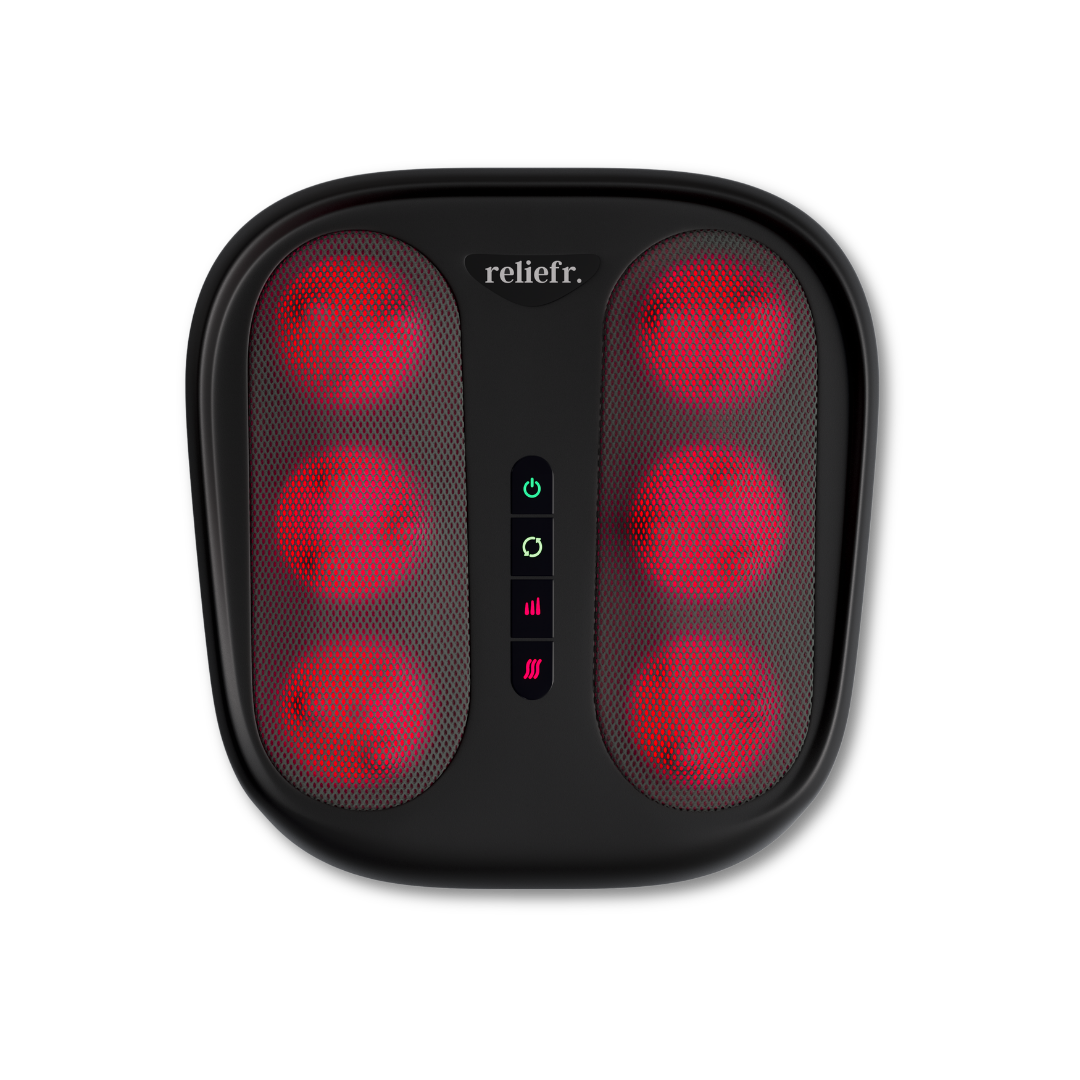
Massage is often mentioned when it comes to relief and well-being. Many people say massage helps them ease tension and brings a pleasant feeling of warmth, and that regular, soothing touch can change how discomfort feels in daily life. At Reliefr, we see massage products as one part of daily well-being, but the effect varies from person to person and over time. Different kinds of relief can also feel different depending on how active you have been that day and how your feet are feeling.
Paying attention to patterns, rather than looking for a quick fix, can give you a fuller picture of the problem. Over time you will often see which situations keep coming back and which habits may affect how the pain feels day to day. Below you will find answers to some questions many people ask.
Frequently asked questions
Can foot pain vary from day to day?
Yes. It is common for it to vary, as strain, sleep, footwear and how active you are can all change how the pain feels. Many people feel more discomfort after long periods of standing at work or walking further than usual.
Do different surfaces affect the pain?
Different surfaces can change how the strain is spread across the foot. Hard and uneven ground can feel different from softer surfaces, and that can affect where and how you feel the discomfort.
What do people find about massage and foot pain?
Many people say massage feels pleasant and helps ease local tension. The effect varies: some notice a difference in the hours after a massage, while others notice changes over a longer period.
.