Most of us have sore legs at some point in life. It can range from a mild, tired feeling to clear tension in the muscles. Legs often get sore after long spells of sitting at work, after hard physical activity or simply from the strain of everyday life. Often it starts as a slight soreness that builds up over time, and it can feel as if your legs are not getting enough variety in how they move. If the soreness hangs on, it can be your body telling you that something in your day needs to change: either more movement or a well-earned rest for your legs. Many people want to know more about sore legs, because they affect comfort and quality of life, even though sore legs are not a medical diagnosis in themselves.
Sore legs are often linked to the way we live. Long periods of sitting still followed by sudden strain can leave your legs both tired and slightly stiff. You may notice it after a day of sitting at work for many hours, or after hard exercise where your leg muscles have worked extra hard. Usually this is a natural reaction to the strain. Paying attention to how your legs feel each day can help you understand why it is often a good idea to change the way you move.
What are sore legs?
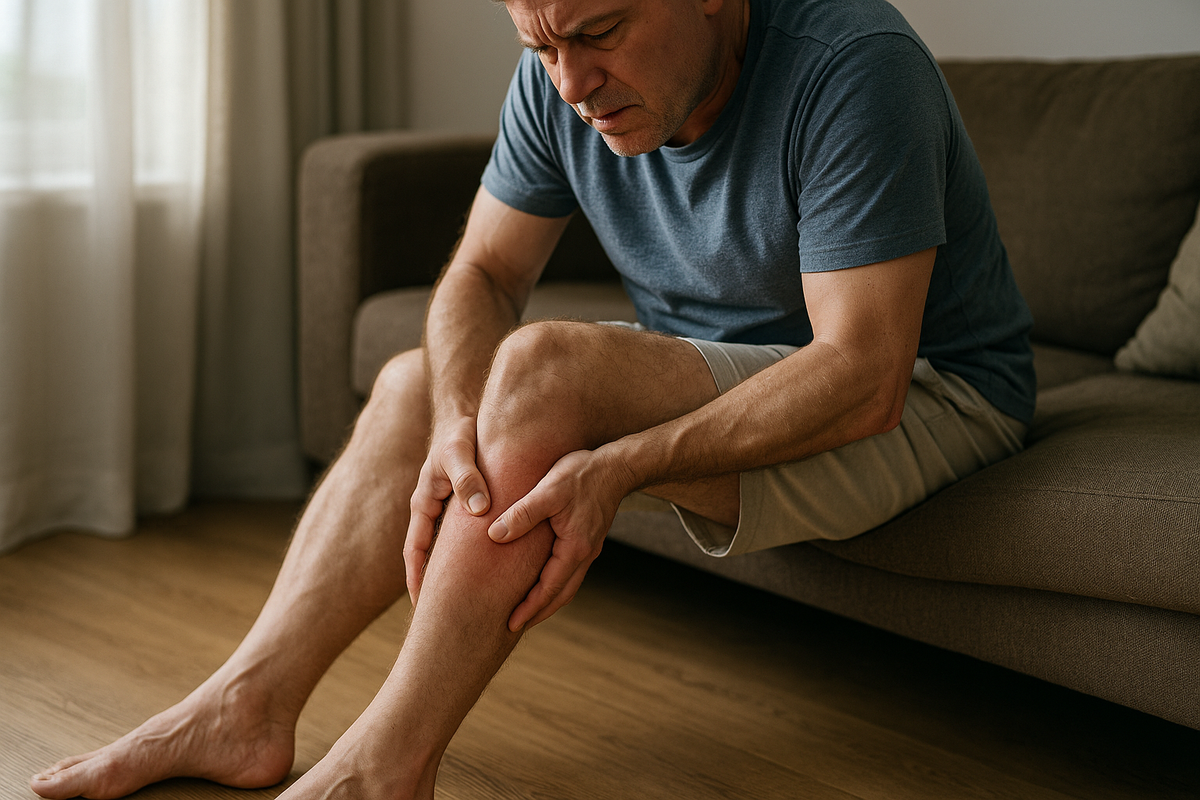
Sore legs means that the muscles in your legs feel tired, tense or painful. The soreness can come straight after physical activity, or it can build up gradually when your legs are put under strain again and again. You often feel it after your legs have had to work extra hard, but it can also show up the day after a long working day. For some people, a slight pressure or stiffness in the legs makes them wonder whether they move enough during the day. Others have more marked soreness that can make normal daily routines harder. Knowing what sore legs involve makes it easier to see how your lifestyle and daily movement are connected with the discomfort you feel.
How do sore legs feel?
Sore legs often feel tired or heavy, either in one spot or more widely. You may feel soreness after activity, stiffness after staying in the same position for a long time, or a throbbing feeling when you press on the muscles. Some people also find they move less easily and that their legs need to "wake up" after rest. Others feel a constant tension that affects walking and working on their feet.
How common are sore legs?
Sore legs are a common complaint in both younger and older people, and they are often linked to how we work and spend our free time. People who sit at work and people with physically demanding days can both get sore legs, although the causes may differ. Sore legs can make standing tasks, walks and sleep less comfortable, and many people notice that the soreness changes with activity and rest.
Everyday things that can cause sore legs
Common causes include repeated strain from work or sport, long periods without varied movement and poor posture when sitting at work. Uneven ground, lots of short walks with frequent stops and starts, and standing in the same way for too long can also put extra strain on your leg muscles. Stress and poor sleep can add to muscle tension and make the soreness feel worse.
Different kinds of soreness and where you feel it
The soreness can come on suddenly after a single strain, or it can linger when the strain is repeated. It is often felt in the legs, feet and calves, but tension can also show up in the back, neck and shoulders at the same time. Some people mainly feel soreness in one muscle group, while others feel a more general tiredness spread over several areas.
Muscle tension in everyday life
Muscle tension feels like tightness or a cramp-like feeling. It is often linked to using the same muscles again and again, or to holding the same position for a long time. Physical tiredness and stress can make tension worse, and it can make ordinary movements feel harder. Understanding how tension builds up during your day can help you spot patterns in when and where the soreness appears.
What to notice in your daily life
If you have sore legs, small patterns in your day can tell you a lot. For many people, the soreness changes in strength during the day and can feel both like heaviness and like tension in one spot. It can help to notice when the discomfort comes and which daily habits tend to go with it.
Things that can play a part over time
Some things in daily life play a part over a longer period and can affect how the soreness develops. Shoes with worn soles or little cushioning can put more strain on your feet and calves. Hard floors and repeated short bursts of strain at work can also play a part, and so can the balance between standing and sitting. Temperature and the clothes you wear can make your muscles more or less sensitive and so affect how sore they feel.
- Tight socks or shoes can sometimes change how pressure is spread and feel uncomfortable
- Days where you move a lot one moment and very little the next can make the soreness come and go
- Spending a lot of time on uneven ground can lead to lasting tension over time
- Sleep quality and mental strain are often linked to muscle tension and how sore your legs feel
The bigger picture
It can be useful simply to note patterns and times, without looking for a specific solution straight away. Many people find that on some days the soreness is clearer, while other days feel easier. Knowing these ups and downs can show you which things keep coming back as triggers. That makes it easier to ask the right questions about your daily habits, if you want to look into it further.
Frequently asked questions
Can massage help with sore legs?
Many people find that massage gives temporary relief and helps loosen tense muscles. Many also describe feeling more supple and that their circulation feels better after a massage, but the effect varies from person to person.
How do sleep and stress affect sore legs?
Poor sleep and high stress are often linked to more muscle tension, which can make your legs more sensitive. Stress can show up as tension that does not go away, and how well you sleep can affect how sore your legs feel the next day.
How does the soreness usually change during the day?
It can range from slight stiffness in the morning to growing heaviness during the day, or tired legs by the evening. Some people also find that how much they move around during the day affects how sore their legs feel.
.