Many people have sore feet in the morning, and it can make the start of the day unusually unpleasant. Stiffness and pain with the first steps is a common problem that affects a wide range of people, whatever their age or daily routine. It often affects how mobile and how well you feel during the day. Sore feet in the morning have several sides to them, including the tight feeling that can build up after a whole night's rest. Many people say the pain is worst when they wake up and eases a little as movement gets the blood flowing. That is why the topic interests so many: the discomfort in those first movements can affect both your comfort and how you get on with your day.
So why do so many people get this kind of soreness, and how does it show in everyday life? Sore feet in the morning covers the general pain and discomfort that can be felt in both the heel and the arch, often caused by inflammation or overload. It is often felt after a longer period of inactivity, such as a whole night's sleep.
What are sore feet in the morning?
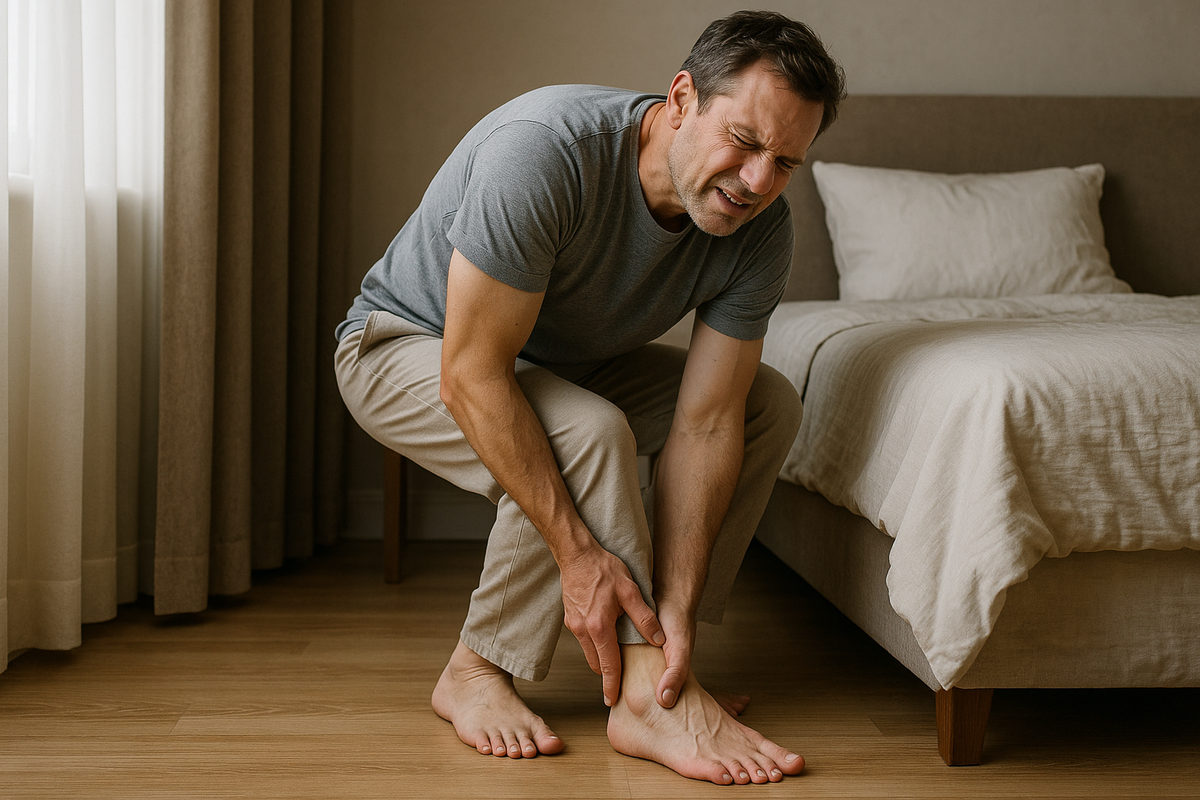
Sore feet in the morning means the pain and stiffness many people feel when they start their day. It is most common when you get up after a period of rest. The soft tissue and tendons in your feet have been inactive and can be more sensitive when you first put weight on them. This morning soreness can feel like tightness in the heel or arch, and it can make the first steps painful and unpleasant. The discomfort usually eases a little once your feet have warmed up and the circulation gets going.
Several things can play a part, and they all have to do with how the muscles and tendons in your feet are used and loaded during the day. If you often have sore feet in the morning, it can be hard to find the right balance between rest and movement, especially when the pain makes those first steps difficult. Knowing what morning soreness involves can help you understand how many everyday factors may affect your comfort. Often the key is to listen to your body's signals and take a calm but attentive approach to your daily well-being.
What does morning soreness feel like?
Morning soreness often shows as sharp or more general pain and stiffness with the first steps after sleep. You may feel pressure in the heel, tightness in the arch or soreness in the front of the foot. Many people find it is worst when they put weight on their feet after resting, and that the pain eases during the morning as blood flow and movement increase. Tense muscles in the lower leg and foot can add to this and change the way you walk, which in some cases can put more strain on the knees, back, neck or shoulders.
How common is morning soreness?
Morning soreness in the feet is common, and many people have it at some point in life. It is more common in people who stand or walk a lot during the day, but it can also affect people who sit at work if their muscles and tendons are not kept supple. Changes that come with age, such as a thinner heel pad, often make the feet more sensitive to pressure and can make morning soreness more noticeable. It may come in short spells or keep coming back, depending on daily strain and habits.
What can make morning pain worse?
Several everyday things can make the pain stronger or make it last longer. Shoes without enough support, or with very flat soles, can put more strain on the arch and heel. Extra body weight increases the pressure on the feet and can make pain more noticeable. Too little regular movement and stretching can lead to more tension in tendons and muscles, which you may feel as stiffness in the morning. Long periods of standing at work, or repeated strain during the day, are also often linked to symptoms getting worse.
Different kinds of pain
Morning soreness can follow different patterns. Some people feel a sudden, short, sharp pain with the first steps, while others have a more general soreness that keeps coming back and lasts further into the day. The pain may sit in the heel, the arch or the front of the foot, or it may feel like general tiredness in the legs and feet. It can range from mild discomfort that you only notice when standing or walking to stronger pain that affects your daily movement and well-being.
Things to notice in everyday life
Small patterns in everyday life can tell you a lot about how morning pain develops over time. If you note when the discomfort starts, whether it is worse after certain days or activities, and how strong it is over the course of a week, you get a picture of what tends to go with it. It will not point to a solution on its own, but it is useful, because patterns often show up as repeated links between daily habits and the pain you feel.
The night can also affect how your feet feel when you wake up. How well you sleep and the position you sleep in can affect the tension in muscles and tendons, which you may feel as stiffness or soreness in your first movements in the morning. This often depends on other things in your life too and can change from night to night.
What everyday signs can tell you
Paying attention to small signs gives you a broader view of what changes over time. Some common things to notice:
- The time of day when the discomfort is worst
- Whether the pain is in one foot or both
- Whether the symptoms change with workdays, days off or how well you sleep
- How your shoe soles wear, as a sign of how your feet are loaded
These points are for information only. They are not instructions, but they can help you understand the changes from day to day. Over time, repeated patterns can show which parts of your everyday life may affect your comfort.
Routines and well-being
Everyday conditions, such as time to recover, normal movement and soothing routines, can affect how morning soreness feels. Massage and relieving products are often mentioned as part of daily habits, and some people find that paying regular attention to their feet changes how they feel over time. At Reliefr, we are often asked how single observations fit into bigger patterns, and what is worth noting in everyday life.
Frequently asked questions
How long can morning soreness last?
It varies from person to person. For some it comes in short spells, while others have symptoms that return over longer periods. It often depends on daily conditions that repeat themselves and on individual differences in tissue and strain.
Is it normal for only one foot to hurt?
Yes, it can happen. Pain in one foot can come from uneven strain or from daily habits. If the symptoms keep appearing on the same side, it may be a sign that the load is not evenly spread.
How can I best describe what I feel when looking for information?
It can help to note the time of day, what the pain feels like, how long it lasts and whether it comes back after certain activities. Notes like these are a useful starting point when you compare information or want to learn more.