Many people have pain in their heel, and it can make everyday life harder. The discomfort is often felt with the first steps in the morning and after resting. It can range from a mild irritation to a sharper, more lasting pain. If you are active every day or stand a lot, heel pain can come from overloading the foot or from uneven strain on it. Changes in how active you are and shoes that don't give enough support can both make heel pain more noticeable. This post gives a calm, straightforward overview of what heel pain is and how it usually feels in everyday life.
Many people look for information about heel pain to better understand what might be behind it. The pain often affects both how you move and how you feel, and for many it starts when they become more active or when the strain on their feet changes. Knowing more about the typical symptoms and possible causes can help you feel calmer and more confident about dealing with the discomfort.
What is heel pain?
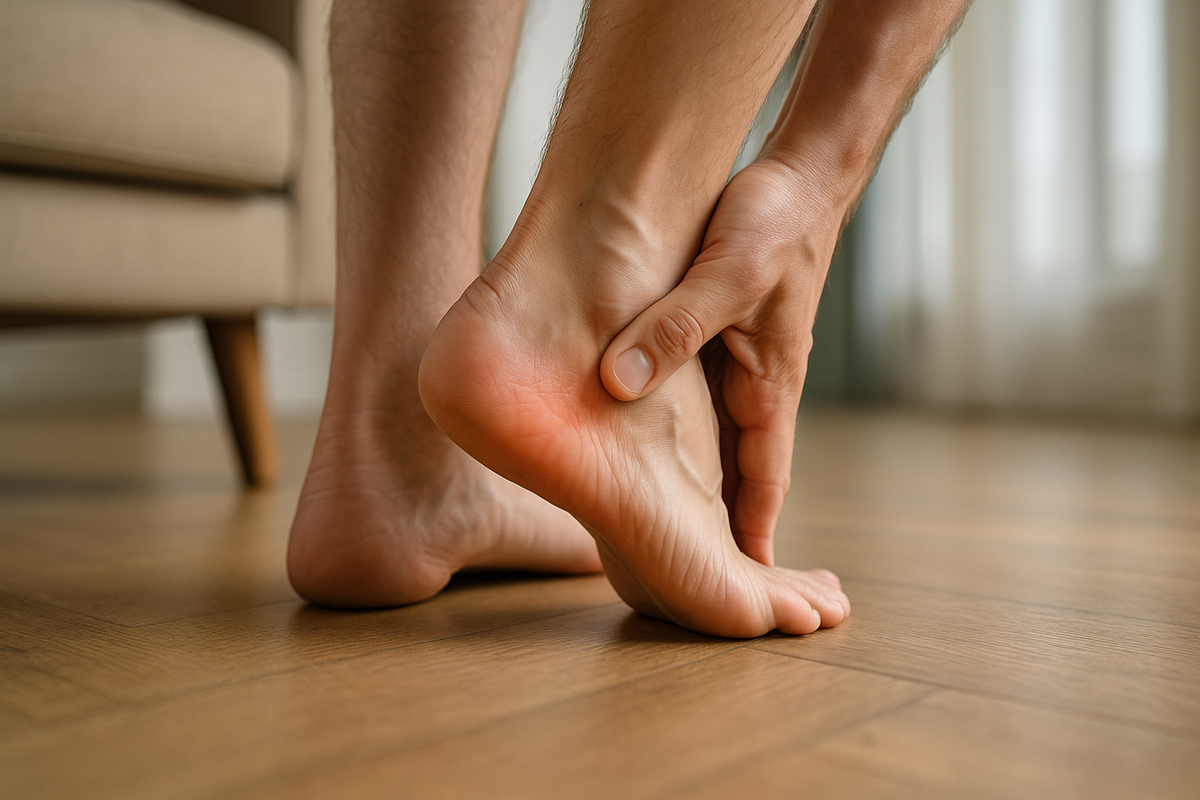
Heel pain is often described as either sharp or more persistent, and it can vary in strength. It can come on suddenly or build up gradually over time. It is often a reaction to overloading the foot, for example during long periods of standing or walking. Certain conditions, such as inflammation of the connective tissue under the foot, can also make the discomfort worse. Many people notice it most when they start the day or get moving again after a break.
Here are some typical signs of heel pain:
- The pain can feel stabbing, or more diffuse and persistent.
- It is often worse in the morning or after long periods of inactivity.
- The discomfort is often linked to overloading the foot or to changes in the strain on it.
Heel pain feels different from person to person. Some find that even small activities make it worse, while others notice it most at the start of the day. Because it varies so much, many people want to understand what lies behind it and how the right approach can bring relief.
How the pain usually feels
Heel pain can show itself in several ways. Many people feel a sharp, stabbing pain with the first steps after resting, while others describe a burning or deeper, more lasting ache after activity. The pain can sit right under the heel or at the back of it, and it may come with stiffness or tenderness when you press on it. For some, the pain changes during the day: sharp when they first get going, then a duller ache after standing or walking for a long time.
When does the pain often start in everyday life?
Heel pain often shows up in everyday situations where your feet take a lot of strain. Long shifts on hard floors, frequent walks and sudden increases in activity are often linked to more discomfort. Surfaces such as concrete or uneven ground can play a part too, and shoes with poor support make the pain easier to feel. The pain can affect your work, your free time and your ability to get through daily tasks without a break.
Why muscle tension matters
Tension in the muscles of the lower leg and in the connective tissue of the foot plays an important part in how heel pain feels. Tight calf muscles can change the way you walk and put more strain on the heel, while tension in the soft tissues of the foot can feel like local tenderness or a pulling sensation. Tension in other areas, such as the back and hips, can also affect the strain down through the leg, so pain in the feet and legs is often linked to tension higher up in the body.
How common is heel pain?
Heel pain is common both in people who are physically active and in people who sit at work. If you suddenly start walking or standing for longer than usual, symptoms often appear. Changes in weight or in the way you move can also cause the pain or make it worse. It can range from a mild irritation to something that limits how active you can be.
How the pain develops
Some people get a short, sharp bout of pain after a particular strain, while others have a more lasting discomfort that slowly builds over weeks or months. Morning stiffness and more tenderness after rest are a common pattern when the pain is linked to everyday strain. Understanding these differences can help you find the right ways to ease the pain and take the strain off your feet in daily life.
Easing the strain and relieving pain day to day
Practical everyday choices make a big difference. Shoes that spread the pressure better, short breaks when you stand for a long time at work, and targeted use of heat or massage to loosen tension can all bring noticeable relief. Small changes in your daily habits can reduce the strain on your heel and help your feet, legs, back and shoulders feel better.
Everyday habits that can make a difference over time
If you have heel pain, it can help to notice recurring patterns in your daily life rather than looking for quick fixes. The pain often varies in strength and in where you feel it, and these patterns are often linked to daily choices or repeated movements. For example, putting more weight on one side of the body, or small repeated changes in the way you walk, can change how pressure is spread across the foot.
Worn shoes and different surfaces
Shoes change over time, and you may notice they give less support or wear unevenly under the sole. The signs can be subtle, such as a worn-down heel or a sagging edge on the sole, and they can affect how the strain is spread. Different surfaces in daily life can also change how your feet feel and how much strain they take, so the same activity can feel different depending on what you are walking or standing on.
Habits and daily movement patterns
Everyday habits, such as the way you stand, how you carry bags or a favourite foot position, can play a part. If you keep favouring one side, the strain can become uneven, so the pain may feel different from day to day. Tired muscles and general sensitivity also affect how the discomfort feels, and sleep or stress can influence how strong the pain is.
Keeping track of changes without changing your routine
Paying attention to patterns is not about changing your habits straight away, but about noticing when and how your heel pain shows up. Small differences in activity, footwear or the way you move can lead to differences in the pain, and over time these can tell you a lot. Observing calmly gives you a clearer picture and makes it easier to ask more specific questions later on.
Frequently asked questions
How quickly can heel pain change?
Heel pain can change over a few days or over several weeks. For some, it suddenly gets worse after certain activities, while others notice the pain slowly getting stronger and weaker. These changes are often linked to how active you are and how tired you are from day to day.
Why can the pain be different in the right and left heel?
Differences between the two sides can be linked to uneven strain, small imbalances in posture or repeated movements that favour one side. This can mean the discomfort sits in a different place or feels stronger on one side.
How do shoes change over time?
Shoes can lose some of their support as the soles wear out, the heel counter collapses or the shoe wears unevenly. These changes affect how pressure is spread, and you may notice your heel feels different during daily activities.
.