Many people notice an unpleasant feeling in the front of the foot when they walk. The pain can come on suddenly during a walk in town, or creep into everyday routines at home or at work. Forefoot pain often affects both your pace and your quality of life, as it can make every step feel harder. It can also be worrying, and you may wonder whether your foot has been under too much strain, or whether something has changed in the way you move. This introduction gives an overview of what pain in the forefoot when walking can mean, and why so many people want to understand what lies behind it.
What is forefoot pain when walking?
Forefoot pain when walking is pain you feel in the front part of the foot as you walk. It can vary in intensity and often feels sharp or stabbing, which can get in the way of ordinary movement during the day. It is often linked to the way the foot is loaded when you walk – on short walks as well as longer distances, where the pressure on the foot gradually builds up.
Forefoot pain can be felt in different ways, for example in these situations:
- When your feet are under strain for long periods
- When you wear shoes that do not give enough support
- When you suddenly change the way you walk or your pace
Forefoot pain when walking is often linked to how the muscles and other structures of the foot react to repeated strain. It can be a mix of daily activity, changes in the surface you walk on and shoes that do not always follow the natural shape and movement of the foot. Many people look for information because they are unsure whether it is a temporary overload or a sign of a more lasting problem in everyday life.
This overview gives you a basic understanding of what forefoot pain when walking involves, and why it keeps coming back for many people. Read on to learn more about how the pain usually starts and how it feels in everyday life.
Common causes of forefoot pain
Forefoot pain often comes from changes in strain or in the foot's ability to spread pressure. Being overweight can increase the strain on the forefoot when you walk and lead to more muscle tension in the lower leg. Inherited features in the shape of the foot can make some people more prone to uneven pressure, and weak muscles in the foot and lower leg can make it harder to keep the foot stable as you push off. This is often linked to long-lasting discomfort.
Standing at work for long periods and taking many repeated steps change the way the soft tissues of the foot work, which can add to tension in both the foot and the calf. This does not only affect the feet. The body may start to compensate higher up, which changes the way you walk.
How the pain usually shows in everyday life
The pain can feel different from person to person, but some patterns come up again and again. Some people feel a sharp or stabbing pain when there is pressure on the forefoot, others a more general soreness that gets worse on longer walks. More tension in the muscles around the foot and lower leg can feel like tightness or tiredness when walking.
- Pain when there is pressure under the toes or as you push off
- A tired forefoot after long periods of standing or walking
- Tight calf muscles along with the discomfort
How common is the problem in everyday life?
Forefoot pain is common among people who stand at work, people who walk long distances every day and people with a higher body weight. Older people may also notice changes in the tissues of the foot that make walking more uncomfortable. That is why many people look for everyday ways to ease pain and tension so they can stay mobile.
Everyday movements and situations that can cause pain
Certain activities and situations in everyday life are often linked to more forefoot pain. Standing at work for long periods, walking on hard surfaces, lots of short walks with frequent changes of direction and carrying heavy bags can all change the strain on the foot. Shoes with a narrow toe area or too little support also change how pressure is spread and can cause more tension in the foot.
Different types of forefoot pain
The pain can range from sharp, stabbing pain as you push off to a more burning or throbbing soreness after walking for a long time. Some people find that tension in the feet, legs and even the back or shoulders is linked to a change in the way they walk, as the body tries to avoid pain. Telling these patterns apart makes it easier to find the right kind of relief and ways to take the strain off in everyday life.
What to keep an eye on in everyday life
Over the coming weeks, it can help to note how your forefoot feels in different situations, without changing your routines. The pain may change during the day and may feel like extra tension after certain repeated movements. Also notice where in the shoe you feel it, whether it moves between the toes and the middle of the foot, and whether the skin shows changes such as patches of hard skin or redness.
- How your shoes fit over time and how the material shapes itself
- Wear patterns on the sole and what they say about how your foot is loaded
- How often you feel stiffness or tingling at certain times of day
- Changes in the muscle tension you can feel under your foot or in your lower leg
Habits and patterns that can matter over time
Some habits are often linked to gradual changes in the forefoot. Repeating the same movements, constant strain on the same part of the foot and always wearing the same kind of shoes can affect how tissues and joints adapt. Small changes in the way you walk, which usually go unnoticed, can also shift where the pressure lands over time and be felt as different kinds of discomfort.
Gradual changes in the shape of the foot often show when familiar shoes start to feel different, or when the foot reacts differently after long periods of strain. These patterns can affect how the pain develops over the months.
Massage and relief in everyday life
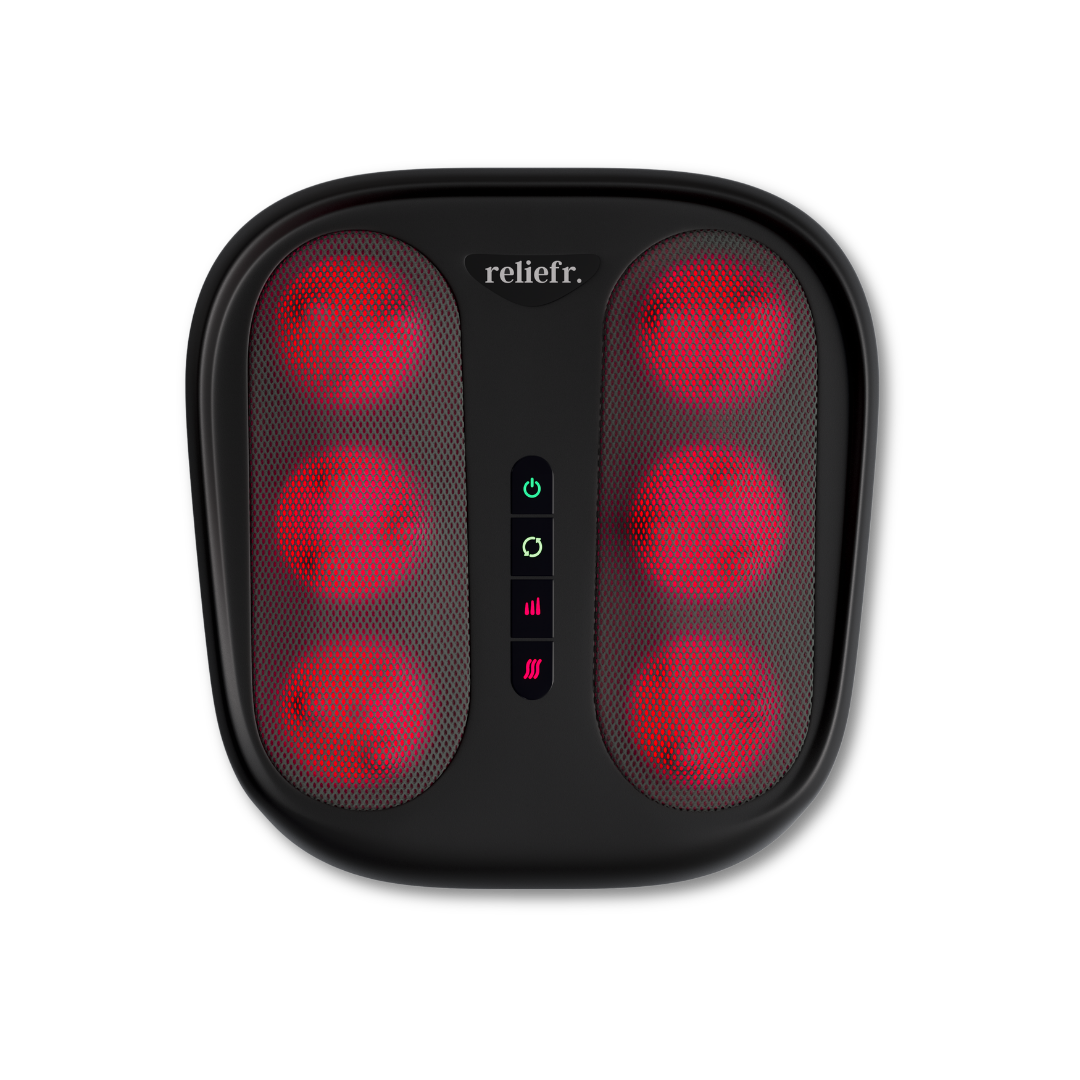
Massage can be a way to ease tension in soft tissue and give temporary relief to tight muscles. In everyday life, paying regular attention to muscle tension and taking the strain off specific areas is often linked to changes in how you move and how you feel. At Reliefr, massage is often described as something that makes the foot feel more flexible and changes how the strain feels when you walk afterwards.
Frequently asked questions
Can massage help with forefoot pain?
Massage can be a way to ease local tension and increase blood flow in soft tissue, which many people describe as feeling more comfortable. The effect is often short-lived and depends on how firm the massage is and which areas are massaged.
How can I make sense of changes in my foot over time?
Changes may show as a wider forefoot, toes shifting position or hard skin appearing in new places. Such changes are often linked to long-term patterns of strain and can affect how your existing shoes feel.
How quickly can pain when walking change?
Pain can vary from hour to hour depending on activity and tiredness, but some patterns develop over weeks or months. It is normal for the pain to vary in strength and in how often it comes, and this can tell you which everyday factors play a part.
.