Many people have pain in the heel, and it can become an everyday challenge, especially when the discomfort is worst in the morning. Pain under the heel often affects things like walking and standing, and many find that the first steps of the day feel especially sharp. The condition varies from person to person, but it helps to understand the basics of what a heel spur is, how the pain comes about and how it can be felt in everyday life. Looking at the facts can give you a calm starting point, so you understand both where the pain comes from and what the condition generally involves.
What is a heel spur?
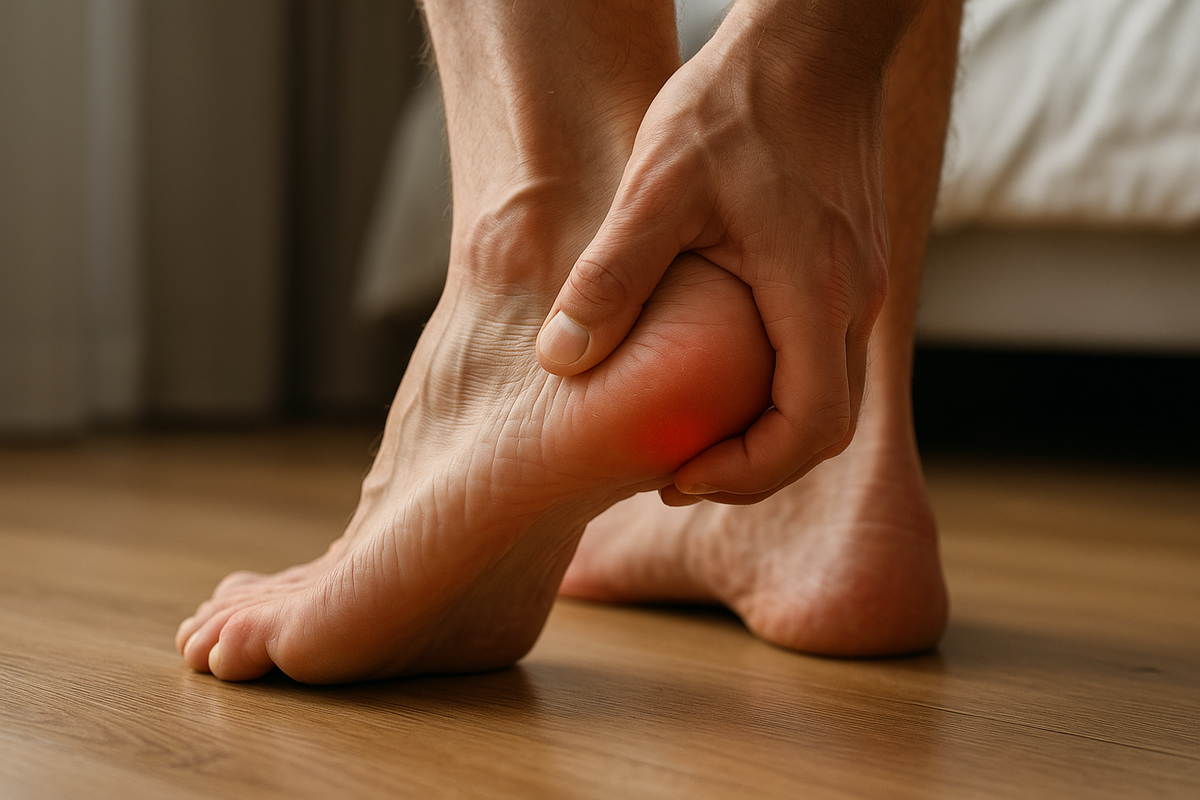
A heel spur is a calcium deposit on the heel bone, which can cause a sharp or throbbing pain. The deposit is linked to repeated strain on the heel, and this is often felt most clearly in the morning. The pain may ease once the heel has warmed up and is moving, but it often comes back after a long period of rest. Many people find that the pain varies in strength depending on how much they have used their feet during the day.
Typical signs of a heel spur can be:
- Pain with the first steps in the morning
- A persistent sharp feeling in the heel when you put weight on it
- Pain that comes back after rest
Many people look for information about heel spurs because they want to know more about how the condition develops and how it affects everyday life. If you often have pain, understanding how a heel spur is linked to strain and the inflammation that follows can help make daily life easier to manage. When you look more closely at how heel spurs feel and how people describe them, it becomes clear that this is a condition many people know – and that knowledge can be useful when you are dealing with pain under the heel.
What does a heel spur feel like?
A heel spur often shows as a sharp or stabbing pain in the heel itself, especially with the first steps in the morning or after a long period of rest. The pain can feel intense when you put weight on the foot, but it is often milder once the foot has warmed up and is moving. Many also describe a throbbing or sore feeling after long walks or standing at work, and the irritation can vary from day to day depending on how active you have been and how much you have rested.
What can cause a heel spur?
Several things can play a part. Repeated strain on the sole of the foot, standing for long periods, unsuitable or hard shoes and long-term excess weight are often linked to greater strain on the heel. Reduced movement in the ankle and tight calf muscles can also increase the pressure on the heel area. Work or hobbies that involve a lot of standing or walking make problems more likely.
How common are heel spurs?
Many people have heel pain at some point in their lives, and it is a common problem for people who walk or stand a lot in their daily lives. It often becomes more common with age and with a lifestyle that puts regular strain on the feet. How often the pain appears and how long it lasts varies from person to person, but it is common for the symptoms to affect daily activities for a while.
Differences between heel spurs and plantar fasciitis
A heel spur and irritation of the plantar fascia, the band of tissue under the sole of the foot, can show up in different ways, although they can occur at the same time. A calcium deposit on the heel bone is not necessarily what causes the pain; often it is the irritation or strain around it that is felt as pain. That is why two people with similar findings on a scan can have very different levels of discomfort in everyday life.
How does heel pain affect everyday life?
Heel pain can change the way you move. When you try to spare the sore foot, tension can build up in other places such as the legs, back, shoulders and neck. It can limit walks, work and hobbies, and lead to more sitting or to avoiding certain movements. For many people, taking the load off the foot in practical ways and focusing on pain relief are important for keeping up their daily routines without constant discomfort.
What to look out for
In everyday life, small patterns and repeated strain can affect how heel pain feels over time. It can help to notice what you were doing before the pain started, how your feet rest in your shoes and in your free time, and how long periods of standing at work affect the feeling in the soles of your feet. Many people find that a change of surface or of cushioning in their shoes makes a difference to the discomfort, and that tension in the calf is often linked to how the load is spread.
Daily routines also often play a part in how the pain is felt. For some, the symptoms are clearer in particular situations during the day, while others feel a more even effect. Paying attention to patterns, rather than looking for one single action, can give you a broader picture of what affects the pain in everyday life.
Habits that can have an effect over time
Some things develop gradually and can matter in the longer term. Here are examples that are often mentioned in connection with heel pain:
- Standing or walking for long periods on hard surfaces
- Worn shoe cushioning and less support from your footwear
- Repeated, one-sided strain at work or in your free time
- Persistent muscle tension in the lower leg
- An uneven walking pattern or foot position over time
These things can affect how the discomfort develops, either on their own or together. Over time, small changes in habits or daily use can affect how often and how strongly you feel the pain, without there necessarily being one single explanation.
It can be reassuring to see these things in perspective and get a broader view of how everyday patterns are linked to the pain you feel. Below you will find answers to common questions on the subject.
Frequently asked questions
Can heel pain change from day to day?
Yes, the symptoms can vary a lot from day to day. Activity, surfaces, shoes and rest can all play a part in how the pain feels. For some, the discomfort lasts for shorter periods, while others have more ups and downs over a longer time.
Do people experience massage differently when they are in pain?
People react differently to massage. Some feel temporary relief or a greater sense of well-being, while others notice no change. The effect often depends on how intense the massage is, which area is massaged and how sensitive you are, so the experience varies from person to person.
How long do the symptoms usually last?
How long heel pain lasts is very individual. For some, the symptoms are short-lived, while others have had longer periods of discomfort that comes and goes. It depends on daily habits, how the feet are loaded and how each person experiences pain.
.