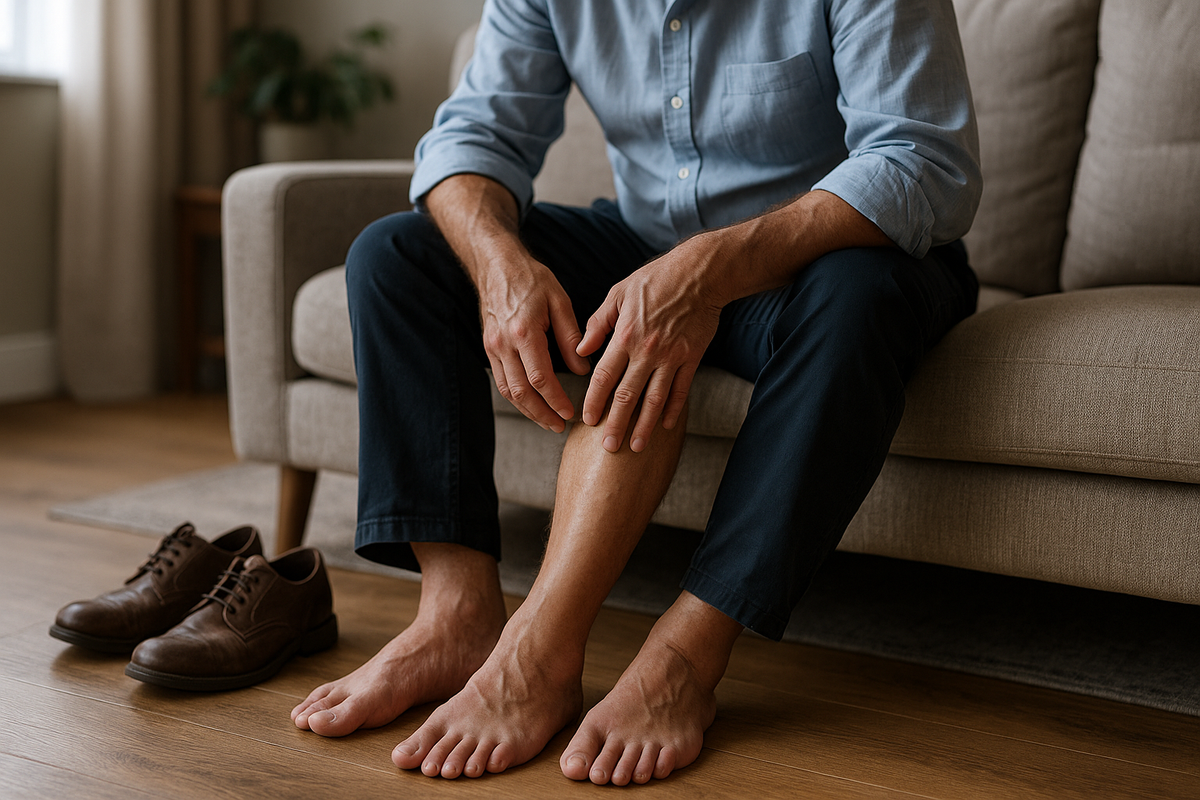
After a long, busy day, many people feel worn out in their legs, as if they were both tired and heavy. It can feel as though your legs can no longer quite keep up and are carrying the weight of everything you have done that day. Most of us know the feeling, whether it comes after physical work, after sitting for a long time or simply from the wear and tear of everyday life. It often shows up in daily life and in the moments when you want to feel good, and it is the body's way of telling you that it needs rest and time to recover.
Heavy legs can be a reaction to different kinds of strain, whether that is tiredness that has built up over time or a short-term build-up of physical stress. It is not regarded as an illness, but it is often a sign that your legs need a break or some especially gentle care. The symptoms vary from person to person. For some, it is a gradual feeling that their legs are no longer quite “light” enough to face another day. The feeling can be seen as the body's natural reaction to overload and to moving in the same way too much of the time.
What are heavy legs?
Heavy legs are described as a lasting feeling of tiredness and heaviness, often in the lower part of the legs. It is not a medical diagnosis but rather a symptom that can build up with the strains of everyday life. Many people find their legs feel more tired after periods of little activity, or after carrying a heavy physical load for a long time.
The feeling of heavy legs is often linked to:
- Sitting or standing for long periods at work
- A busy day with lots of activity and physical tiredness
- A sense that the muscles and tissues in the legs are overloaded
This shows how heavy legs can come both from everyday tiredness and from periods with less movement. The feeling is usually unpleasant, and it leaves you wanting practical ways to bring your legs some relief. That is why many people look for information on what can ease heavy legs, so they can feel lighter and more comfortable in everyday life. Understanding what heavy legs are also helps you see how everyday activities affect your body, and what can make a small difference to your comfort and balance from day to day.
How heavy legs show up in everyday life
Heavy legs often show up as a lasting feeling of heaviness and tiredness in the lower legs. You may notice soreness, tension in the calves, cramps or a feeling of swelling. Some people also describe tingling, or cold or warm feet, and visible veins can be part of the picture. These symptoms usually appear in the legs, feet and thighs, but they are often linked to tension in the back, neck or shoulders, which affects your posture and so the strain on your legs.
Common causes behind the feeling
Heavy legs are often linked to things that change the strain on muscles and tissue, or the way blood moves around the body. Sitting or standing for long periods at work are common examples, as is repeated hard strain on the leg muscles. Muscle tension after exertion can cause stiffness, which makes the legs feel heavier than usual. A higher body temperature and your fluid balance can also affect how your legs feel during the day.
Everyday factors that can play a part
- Standing or sitting for long periods, at work or in your free time
- Hot days or a warm indoor climate, which can make the legs more tired
- Stiff muscles from repeated strain or from always moving in the same way
- Your choice of shoes and the surfaces you walk or stand on, which change the strain on your legs and feet
How common are heavy legs?
Heavy legs are common, and many people experience them to a greater or lesser degree. They can affect people of all ages, but they are most common in people who spend many hours standing or sitting, and in people whose muscles are tired after physical work. The problem is not the same for everyone: some have occasional bouts, while others feel a more constant heaviness.
Changes in intensity and time of day
The symptoms can vary in strength throughout the day. Many people find the heaviness becomes more noticeable towards the evening after a day of strain, while others notice it most after long periods of little activity. How often it happens and how bad it feels can also change with work, climate and the general condition of your muscles, and periods of extra stress or tiredness often make the feeling stronger.
.